Computer Applications (BCA)

Edit Template

BCA at KLESNC, one of the top BCA Colleges in Bengaluru, was established in the year 2000 with a vision to nurture IT, professionals, with a perfect blend of technical skills and human values. KLE BCA is one of the top colleges in Bengaluru where “Smart classes and close mentoring relationships” is more than a tagline; it is a long-standing philosophy, a hallmark, and a genuine distinguishing feature. The course empowers the students by preparing them to adapt, adhere, apply and achieve balance and excellence in their careers; thereby empowering them to add value to industry and society at large.

Programmes:
UGBachelor of Computer Applications
PGMaster of Computer Applications
Short Term Courses:
2020-2021
SL. No.Department Certificate CourseDuration of the Course Link
1BCACyber Security Infrastructure Configuration2.30 hrs
  1. RPA Starter
  2. Ui path document understanding overview
  3. Ui Path AI Fabric Overview
  4. Ui path data service
  5. UI Path Certification Course 2020-21 Odd-Sem
  6. UI-Path-Certification-Course-2020-21-Even-Sem
2RPA Starter3.30 hrs
3Ui path document understanding overview4.45 hrs
4Ui Path AI Fabric Overview2.30 hrs
5Ui path data service3 hrs
6Uipath RPA platform 20.4 Updates3 hrs
7Cyber Security Foundation3 hrs
8Uipath foundation to logging2.5 hrs
9Cybersecurity essentials4 hrs
10Uipath StudioX2.5 hrs
11Uipath Automation Cloud1 hr
12Uipath Security1.50 hrs
13Uipath Processing Mining App One9.5 hrs
14Debugging2 hrs
2022-2023
SL. No.Department Certificate CourseDuration of the Course Link
1BCACampus to Corporate Training50 hoursCampus to Corporate Training – Report New V Sem

Syllabus

  1. BCA-Syllabus
  2. NEP BCA-Syllabus-I-II-Semester
  3. NEP-BCA-Syllabus-III-IV Semester
  4. NEP BCA Syllabus V-VI Semester

Previous Year Question papers
CBCS

NEP

Mr Prajwal G V

MA (NET)
Assistant Professor

Mr Shivarajakumar R

MCA
Lecturer

Mr.Jagadish Kotagi

M.Tech (KSET)
Lecturer

Mrs Bhuvana B M

MCA
Lecturer

Mrs Kasireddy koteswari

M .Tech
Lecturer

Mrs Sudha kamshetty

M .Tech
Lecturer

Mrs.Daneshwari Alur

M.Sc
Lecturer

Mrs.Suganthi Devi

MS (IT &M)
Lecturer

Mrs.Bharathi N

MCA (KSET)
Lecturer

Mrs.Prabha B V

MS
Lecturer

Mrs.Roopa H R

MCA (Phd)
Lecturer

Mrs.Sharada C

M.Tech (Phd)
Lecturer

Mrs.Snehal Gavade

M.Sc
Lecturer

Ms Preetha Sarathy P

MCA
Lecturer

Technical Staff

Mrs.Pranateertha Jagadish Aradhya

DCS , BSC[IT]
System Admin

Mrs.Veena Revadi

BE
Computer Programmer

STUDENT STRENGTH (2018-2019 to 2022-23)

YearTotal Number ofIntake Total Number of Admissions taken
BCABCA
2018-19480477
2019-20480467
2020-21480446
2021-22480478
2022-23480478

Click to View Result Analysis Report

University Ranks

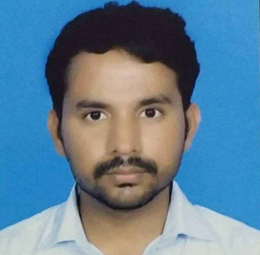
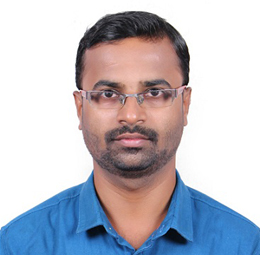
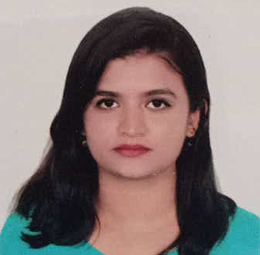
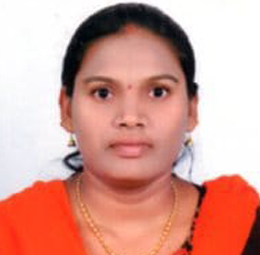
Sl. NoName of the Student &Register NoCourseAwarded byRanksPhoto
1.Yogesh V Naik[R1818249] BCABengaluru City University UG (BCA) Examination 2020-212nd
2.Navyashree V [R1918286]BCABengaluru City University UG (BCA) Examination 2021-221st 
3.Rachana R[R1918305]BCABengaluru City University UG (BCA) Examination 2021-228th
4.Pavithra Bai B[R1918296]BCABengaluru City University UG (BCA) Examination 2021-2210th

Program Outcome

Sl. NoProgramme Programme Outcome
1Bachelor of Computer Application (BCA)
  • To produce employable IT workforce, that will have sound knowledge of IT and business fundamentals that can be applied to develop and customize solutions for Small and Medium Enterprises (SME)
  • To develop skilled manpower in the various areas of information technology like: Database management, Software Development, Computer-Languages, Software engineering, Web based applications etc.
  • Prepare the students with exceptional skills of problem solving, communication and leadership skills.
  •  Prepare the students to provide professional solutions to real time problems
  • To be a foundation graduate programme which will act as a feeder course for higher studies in the area of Computer Science/Applications.
  •  To develop skills in software development so as to enable the BCA graduates to take up self-employment in Indian & global software market.
  • To Train & Equip the students to meet the requirements of the Industrial standards.

Course Outcome

1Mathematics
  • Evaluate Group, Ring and Fields and 2D Geometry.
  • Familiarity with Determinant and Matrices.
  •  Formulate Limit, Continuity and Differentiability.
  •  Demonstrate a working knowledge Definite and Indefinite Integrals.
2English Language and Communication
  • Mastering the art of a professional business presentation
  • More effective written communication
  • To sensitize students to the aesthetic, cultural and social aspects  of literature.
  •  To develop in the learners an appreciation of the subtle nuances of literary expression.
  •  To enable the learners to revalue literature as cultural and communicative events.
  •  To improve the learners’ use of language as a means of subjective expression.
3Computer Architecture
  • Ability to understand the functions of various hardware components and their building blocks .
  • Ability to understand and appreciate Boolean algebraic expressions to digital design.
  •  Understanding of sequential and Combinational circuits  Understanding of realization of different combinational/sequential circuits
  •  Understanding of different stages of an instruction execution
  • Understanding of how different hardware components are related and work in coordination
  • Ability to understand computer buses and input/output peripherals.
4Programming
  • Design, develop and test windows based and web based programs.
  •  Implement and innovate commands using the basic tool kit in UNIX.
  • Understanding of the principles and practice of object oriented analysis and design in the construction of robust, maintainable programs which satisfy their requirements.
  • Ability to implement, compile, test and run Java, C++  programs comprising more than one class, to address a particular software problem.
  • Design, create, build, and debug Visual Basic applications.
  •  Explore Visual Basic‘s Integrated Development Environment (IDE).
  • Write and apply procedures, sub-procedures, and functions to create manageable code.
  •  Understand the basic working of Internet and its main services.
  • Acquire knowledge about the facilities for secure communication
  •  Understand, analyze and build interactive web applications.
  • Understand, analyze and build dynamic web pages using JavaScript and VBScript (client side programming).
  •  Understand, analyze and create XML documents and XML Schema
  • Understand the programming constructs, compile, test and run C programs.
  • Turbo C IDE is used as platform for running C programs
  • Create programs using Python IDLE
  • Learn the program constructs, interpreter and run Python programs.
  • Implement OOPs concepts, usage of graphics, and implement error handling in programs.
  • work with user inputs to create fun and interactive programs
5Operating Systems
  • Analyze the concepts of processes in operating system and illustration of the scheduling of processor for a given problem instance.
  •  Identify the dead lock situation and provide appropriate solution so that protection and security of the operating system is also maintained.
  •  Analyze memory management techniques, concepts of virtual memory and disk scheduling.
  •  Understand the implementation of file systems and directories along with the interfacing of IO devices with the operating system.
6Data Structures
  • Analyze data structure impact on algorithms, program design and program performance.
  • Understand the concepts of  binary search trees, heaps, and disjoint sets.
  • Explain & describe the applications of static and dynamic trees.
  •  Design, implement, and use advanced ADTs
7Computer Networks
  • To explain how communication works in computer networks and to understand the basic terminology of computer networks .
  •  To explain the role of protocols in networking and to analyze the services and features of the various layers in the protocol stack.
  •  To understand design issues in Network Security and to understand security threats, security services and mechanisms to counter
8Software Engineering
  • Extract and analyze software requirements specifications for different projects.
  • Develop some basic level of software architecture/design.
  •  Apply standard coding practices.
  •  Define the basic concepts and importance of Software project management concepts like cost estimation, scheduling and reviewing the progress.
  •  Identify and implement the software metrics.
  •  Apply different testing and debugging techniques and analyzing their effectiveness.
9Data Base Management System
  • Able to construct an Entity-Relationship (E-R) model from specifications and to transform to relational model. Able to construct unary/binary/set/aggregate queries in Relational Algebra.
  •  Understand and apply database normalization principles.
  •  Able to construct SQL queries to perform CRUD operations on database. (Create, Retrieve, Update, Delete)
  •  Understand principles of database transaction management, database recovery, security.
10Software Testing
  • To understand the Test and Analysis activities within the software process.
  • Develop some basic level of understanding on testing and test cases like Random versus Partitioning testing, structural testing, path testing, procedural call testing and many more.
  • Understanding the planning and monitoring process
11Digital Electronics
  • Understanding network theorems and AC fundamentals
  • Understand the electronics of semiconductor devices
  • ability to understand, analyze and design various, logic gates, sequential circuits and combinational circuits
Lab:
  • Define different types of logic gates, identify their ICs and verify their truth table.
  • Design and test combinational circuits
  • Design and develop sequential circuits and derive the basic logic gates viz., adder, subtractor using universal gates.
12Data Communication and Network
  • understand network communication using the layered concept, Open System Interconnect (OSI) and the Internet Model and operations behind various application layer protocol like HTTP, SMTP, FTP..
  • understand various types of transmission media, network devices; and parameters of evaluation of performance for each media and device.
  • understand the concept of flow control, error control and LAN protocols; to explain the design of, and algorithms used in, the physical, data link layers.
  • understand the functions performed by a Network Management System and to analyze connection establishment and congestion control with respect to TCP Protocol.
Lab
  • Understand details and functionality of layered network architecture.
  • Apply mathematical foundations to solve computational problems in computer networking
  • Analyze performance of various communication protocols.
  • Understand packet /file transmission between nodes.
13System Programming
  • Understanding general design procedure of assemblers and sorting techniques
  • Understanding the macro instructions, loaders and compilers
14Artificial Intelligence
  • Understanding of the concept of AI
  • Identifying the  application areas of artificial intelligence in real life. Apply AI techniques to real-world problems to develop intelligent systems
  • understand the different artificial intelligence concepts in multidisciplinary domains considering social needs
15Analysis and Design of Algorithms
  • Analyze the performance of algorithms using time and space complexity
  • Describe the divide and conquer, greedy, dynamic, backtracking paradigm and explain how the problems can be solved and analyze the complexity of algorithms.
  • understand the basic traversal and searching techniques (BFS, DFS)
16Internet Technologies
  • Understand security aspects and regulations to be followed when using internet.
  • Understand the different generations of Web technology.
  • Understand the retrieval of information on internet.
  • Understanding the basic protocols of all the layers of TCP / IP
  • Understand the working of client and server side technologies
17Data Analytics
  • Apply computing theory, languages, and algorithms, as well as mathematical and statistical models, and the principles of optimization to appropriately formulate and use data analyses
  • Present an overview of data science and applications.
  • Formulate and use appropriate models of data analysis to solve hidden solutions to business-related challenges

Program Specific Outcome

1Mathematics Reason mathematically about basic discrete structures used in computer science
2English LanguageDistinguishing different communication process and its practical application.
3Computer ArchitectureAbility to understand theory of Digital Design and Computer Organization to provide an insight of how basic computer components are specified.
4ProgrammingAnalyze a given problem and develop an algorithm to solve the problem and improve upon a solution to a problem
5Operating SystemAbility to understand the concepts of Process Management, Memory Management, File Management, I/O Management.
6Data StructuresUnderstand and apply amortized analysis on data structures
7Computer NetworkUnderstand the design issues and protocols in OSI Reference model
8Software EngineeringSelect and implement different software development process models
9Database Management SystermAble to master the basic concepts and understand the applications of database systems.
10Software TestingUnderstand the fundamentals and framework of Test and Analysis.
11Digital ElectronicsHands on training to develop skill to build and troubleshoot digital circuits.
12Data Communication and NetworkUnderstanding the fundamental principles of computer networking.
13System ProgrammingUnderstanding general machine structure and components of programming system.
14Artificial IntelligenceUnderstand the concepts and importance of artificial intelligence
15Analysis and Design of AlgorithmsUnderstand the different algorithmic design techniques and choose appropriate algorithm design techniques for solving problems.
16Internet TechnologiesUnderstand the working of Internet and new opportunities in IT
17Data AnalyticsUnderstand, analyze and interpret the data using an ethically responsible approach
Academic Events 2022-23
SLNoName of the event Number of ParticipantsDate  TitleLink to the Activity report on the website
1Orientation ProgramI Semester Students10-09-2022“Pradyutita – 2022 Orientation”Link to report
13-09-2022Alumni InteractionLink to report
13-09-2022Interaction with Industry ExpertLink to report
14-09-2022Guest TalkLink to report
2Pre-Placement TalkV Semester Students29/10/2022“Arjavam”Link to report
3Certificate CourseIII year students30-06-2022 to 09-07-2022AI & ML with PythonLink to report
III year students30-06-2022 to 09-07-2022FlutterLink to report
III year students30-06-2022 to 09-07-2022Web Development Full StackLink to report
Soft Skills TrainingV Semester Students31-10-2022To06-11-2022Campus to Corporate TrainingLink to report
4Induction ProgramI SemesterStudents22-08-2022To27-08-2022Deeksharambh – 2022Link to report
5Placement TrainingVI Semester BCA & BSc05-05-2023World Youth Skills DayLink to report
6IT & Culture FestAll Semester12-08-2022 to13-08-2022GRALITZ – 2022Link to report
7Awareness programmesAll Semester Students02-10-2022Green Bharat AbhiyanLink to report
8Awareness programmesI Semester Students29-09-2022IISHT – Mental Health Awareness CampaignLink to report
9Placement TrainingVI Semester Students20-06-2022 to24-06-2022Placement TrainingLink to report
10Farewell ProgramVI Semester Students05-11-2022SAYONARA 2022Link to report
11Awareness programmes IV & VI Semester Students16-07-2022World Youth Skills DayLink to report
Academic Events 2021-22
SLNoName of the event Number of ParticipantsDate  TitleLink to the Activity report on the website
1WebinarII Semester Students19-06-2021 WebologyLink to report
2VI Semester Students10-07-2021Fixed Line CommunicationLink to report
3VI Semester Students29-07-2021Strategic Thinking and Effective Decision MakingLink to report
3National Level WorkshopAll Students30-09-2021 to 01-10-2021Use of DRONES in Preventing Natural DisastersLink to report
 Certificate CourseIII year students21-10-2021 to 02-11-2021IoTLink to report
III year students25-10-2021 to 02-11-2021AndroidLink to report
5Skill Enhancement ProgramIII year BCA & BSc Students25-05-2022Honeywell India Youth Teckathon 2022Link to report
 Online Certification CourseII year students29-11-2021Ui Path – Data Tables and Excel AutomationLink to report
II Year students25-10-2021 to 26-10-2021Ui Path – RPA Studio Pro, Automation with StudioXLink to report
II year students28-10-2021Ui Path – Robotic Enterprise FrameworkLink to report
II year students24-11-2021Ui Path – Application Testing Test SuiteLink to report
II year students09-12-2021Ui Path – PDF AutomationLink to report
Academic Events 2020-21
Sl.NoName of the eventNumber of ParticipantsDate TitleLink to the Activity report on the website
1Orientation ProgramI Year Students 18-09-2020Multidimensional Excellence – A need greater than ever beforeLink to report
19-09-2020Internet of ThingsLink to report
21-09-2020Lets decode the code behind Software Link to report
21-09-2020Sprouting TechnologyLink to report
22-09-2020Improving EQ using Neuro-Linguistic ProgrammingLink to report
23-09-2020Talent is OverratedLink to report
23-09-2020Future Perspective of BCALink to report
24-09-2020Role of ICT Academy-Bridge between Industry and Academia Link to report
24-09-2020Single pointed focus to explore fulfilling career OpportunitiesLink to report
2WebinarII Semester Students15-05-2021Cyber Security in Financial Services Link to report
VI Semester Students29-05-2021Emotional IntelligenceLink to report
3 Online Certification CourseI, II & III year students23-09-2020UI Path Certification – RPA StarterLink to report
II & III year students05-10-2020UI Path Certification – AI Fabric OverviewLink to report
I, II & III year students09-10-2020, 28-10-2020, 13-11-2020 & 08-12-2020UI Path Certification – Data Service, RPA Flatform, Logging, StudioXLink to report
I, II & III year students16=04-2021 to 02-05-2021UI Path Certification – Path Security, Automation Cloud, Mining App, DebuggingLink to report

Research Paper Presentation with publications

2022 – 23

Sl.No. Name of theStaffWhetherPresentation/ PublicationName ofPresentation /PublicationPlacewhere it waspresented /publishedTitle ofthe Theme /TopicDate &Place
1Sharada CPublication“The role of Technology Enabled Education in resolving Un-employability in India”Published“Growing infrastructure – A Key to Transforming Indian Economy”30th and 31st March 2023,        KLE SNC, Department of Commerce
2Sharada CPublication“Impact of online learning on school education”Published“Growing infrastructure – A Key to Transforming Indian Economy”30th and 31st March 2023,        KLE SNC, Department of Commerce
3Roopa H RPublication“The role of Technology Enabled Education in resolving Un-employability in India”Published“Growing infrastructure – A Key to Transforming Indian Economy”30th and 31st March 2023,        KLE SNC, Department of Commerce
4Roopa H RPublication“Impact of online learning on school education”Published“Growing infrastructure – A Key to Transforming Indian Economy”30th and 31st March 2023,        KLE SNC, Department of Commerce
5Bharathi NPublication“The role of Technology Enabled Education in resolving Un-employability in India”Published“Growing infrastructure – A Key to Transforming Indian Economy”30th and 31st March 2023,        KLE SNC, Department of Commerce
6Bharathi NPublication“Impact of online learning on school education”Published“Growing infrastructure – A Key to Transforming Indian Economy”30th and 31st March 2023,        KLE SNC, Department of Commerce
7Prabha B VPublication “Public and Private Transport Systems” “Public and Private Transport Systems”National Level Seminar“Growing infrastructure – A Key to Transforming Indian Economy”30th and 31st March 2023,        KLE SNC, Department of Commerce
8KoteshwariPublicationNational Level Seminar“Growing infrastructure – A Key to Transforming Indian Economy”30th and 31st March 2023,        KLE SNC, Department of Commerce
9Roopa H RBook PublicationSoftware EngineeringSkyward PublishersSoftware EngineeringBCA IV Semester NEP Syllabus2023

2021 – 22

Sl.No. Name of theStaffWhetherPresentation/ PublicationName ofPresentation /PublicationPlacewhere it waspresented /publishedTitle ofthe Theme /TopicDate &Place
1Mrs. Roopa H R     Presentation & PublicationRisingThreats inExpert Application andSolutionsProceedings ofFICR-TEAS2022Lecture Notesin Networksand SystemsVolume 434Jaipur, IndiaISSN 2367-3370ISBN 978-981-19-1121-7The Role ofArtificial NeuralNetwork in WordSenseDisambiguation(WSD) – A Survey     2022Jaipur,India
2Mrs. Roopa H RPublication & PresentationNational Chapter BookCovid-19 Crisis and IndiaApplication of Science and Technology in Covid – 192021
3Mrs. Bharathi NPresentation& PublicationRisingThreats inExpert Application andSolutionsProceedings ofFICR-TEAS2022 LectureNotes inNetworks andSystemsVolume 434ISSN 2367-3370ISBN 978-981-19-1121-7A Survey onWater UsageOptimizationUsing ArtificialIntelligence inAgriculturalSector2022Jaipur,India
4Mr. Sriram RPresentation & PublicationInternational Conference forEmergingTechnologies2022 3rdInternationalConference for EmergingTechnologies(INCET) – IEEEBengaluruSectionAn Educationalbased IntelligentStudent StressPrediction usingML2022Belgaum, India

2020-21

Faculty NameTitle of the paperName of Conference/SeminarName of the Institute/ UniversityNational/International
Mr. Pavan A CImproving the quality of Life WABN/WBSN’s in this Pandemic – A SurveyInternational ConferenceNAInternational Conference
Mr. Prajwal RImplication of technology in agriculture – Review on smart agricultureInternational Conference

2021 – 22

S. NoName of the StudentDateTitle of the paperName of the Journal ISBN/ISSN NoImpact factor
1Ms. Chandana PFeb 2022An article on artificial intelligence for biodiversity conservationInternational journal of research and analytical reviews(IJRAR)E-ISSN 2348-1269, P-ISSN 2349-51387.17
2Mr. Ganapati Laxmikant HegdeFeb 2022Artificial intelligence in E-CommerceInternational journal of research and analytical reviews(IJRAR)E-ISSN 2348-1269, P-ISSN 2349-51387.17
3Kusuma B L, Pavithra Bai BFeb 2022Smart Agriculture and agro based industry using various technologiesInternational journal of research and analytical reviews(IJRAR)E-ISSN 2348-1269, P-ISSN 2349-51387.17
4Nagadeepak T VFeb 2022A survey on E CommerceInternational journal of research and analytical reviews(IJRAR)E-ISSN 2348-1269, P-ISSN 2349-51387.17
5Mohit Ballal B T, R SnehaFeb 2022Live attendance system using image processingInternational journal of research and analytical reviews(IJRAR)E-ISSN 2348-1269, P-ISSN 2349-51387.17
6Anusha J R, Navyashree V, Suryakanth RFeb 2022Renewable energiesInternational journal of research and analytical reviews(IJRAR)E-ISSN 2348-1269, P-ISSN 2349-51387.17
7Rachana R, Sahana H AradhyaFeb 2022E-Commerce: A surveyInternational journal of research and analytical reviews(IJRAR)E-ISSN 2348-1269, P-ISSN 2349-51387.17
8Rahul GFeb 2022An article on biomaterials and bio devicesInternational journal of research and analytical reviews(IJRAR)E-ISSN 2348-1269, P-ISSN 2349-51387.17
9Rakshitha G, Prajwal JFeb 2022Smart agriculture and agro based industries: an articleInternational journal of research and analytical reviews(IJRAR)E-ISSN 2348-1269, P-ISSN 2349-51387.17
10Rohan ShettyFeb 2022Green innovation in Crypto-currencyInternational journal of research and analytical reviews(IJRAR)E-ISSN 2348-1269, P-ISSN 2349-51387.17
11Sanjana Lakshmi, Sneha SFeb 2022An article on artificial-neural networksInternational journal of research and analytical reviews(IJRAR)E-ISSN 2348-1269, P-ISSN 2349-51387.17
12Shaguftha TabiaFeb 2022A study on cryptographyInternational journal of research and analytical reviews(IJRAR)E-ISSN 2348-1269, P-ISSN 2349-51387.17
13Sinchana H R, Jeevitha N SFeb 2022Artificial intelligence for biodiversity conservationInternational journal of research and analytical reviews(IJRAR)E-ISSN 2348-1269, P-ISSN 2349-51387.17
14Swathi S Heralagi, S PrajwalFeb 2022An article on cryptocurrencyInternational journal of research and analytical reviews(IJRAR)E-ISSN 2348-1269, P-ISSN 2349-51387.17
15Tharun V, Darshan NFeb 2022A secure hashing approach using CBC modeInternational journal of research and analytical reviews(IJRAR)E-ISSN 2348-1269, P-ISSN 2349-51387.17
16Varshitha N, Soujanya Rai K, Yaashika VinodFeb 2022An article on nano material and technology for sustainable environmentInternational journal of research and analytical reviews(IJRAR)E-ISSN 2348-1269, P-ISSN 2349-51387.17
17Vinay N, Kumaran GFeb 2022E Commerce using dronesInternational journal of research and analytical reviews(IJRAR)E-ISSN 2348-1269, P-ISSN 2349-51387.17
18Vinay N, Umesh SFeb 2022A secure whirlpool hashing approach using CFB modeInternational journal of research and analytical reviews(IJRAR)E-ISSN 2348-1269, P-ISSN 2349-51387.17

Research Publications Details

 Sl.NoDateColorName of the ActivityBeneficiaries
1.12/06/23White
  1. Carrom
  2. Chess
3.       Table Tennis
VI Sem Students
2.13/06/23Red1.       Ball Balancing2.       Call the Number3.       Dumb Charades4.       PictoriaIV Sem Students
3.14/06/23Green
  1. Carrom
  2. Chess
  3. Table Tennis
II Sem Students
4.15/06/23Yellow
  1. Carrom
  2. Chess
  3. Table Tennis
IV Sem Students
5.16/06/23Pink
  1. Throw ball
  2. Volley ball
3.       Track games
II, IV, and VI Semester students
6.17/06/23Blue
  1. Throw ball
  2. Volley ball
3.       Track games
II, IV, and VI Semester students
 Sl.No Date Name of the ActivityName of Students Participated Beneficiaries
 1. 01/12/2021 Best of waste 50 I , II & III Year Students
 2. 29/12/2021 The Bouncer  35 I & II Year Students
 3. 17/11/2021 1.     Sound Spirit2.     Singing   30 I & II Year Students
 4. 23/06/2021 Ludo  144 I , II & III Year Students
 5. 26/05/2021 Gaming Free Fire  75 I , II & III Year Students
 Sl. No Date Name of the Activity Name of Students Participated Beneficiaries
 1. 01/12/2021 Singing 30 I , II & III Year Students
 2. 29/12/2021 Dancing  75 I & II Year Students
 3. 17/11/2021 1.     Make up/ Face Painting  30 I & II Year Students

Sl. No.YearName of the ActivityPurposeTarget GroupLink to Report
12016-17Go Cashless, Go DigitalBenefits of Cashless TransactionsPublic
  1. 2019-20
  2. 2018-19
  3. 2017-18
  4. 2016-17
22017-18Awareness ProgramSpreading awareness about computers in everyday lifePublic
32018-19DeforestationAwareness on  Deforestation and its effectsPublic
42018-19Kodagu reliefKodagu Flood RescuePeople of Kodagu
52019-20Plastic free IndiaAwareness on Ill effects of PlasticPublic

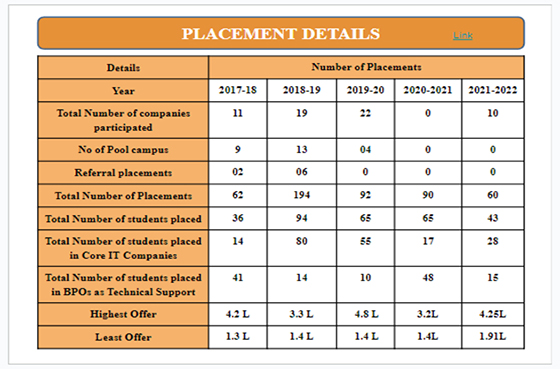
Summary of Placement Details:

1) CBCS 5th Semester 2022

  1. V Sem Artificial intelligence_Apr_2022
  2. V Sem Computer Architecture_Apr_2022
  3. V Sem Data Communication and Networks_Apr_2022
  4. V Sem Data Mining_Apr_2022
  5. V Sem Theory of Computation_Apr_2022
  6. V Sem_Microprocessor and Assembly Language _Apr_2022

2) CBCS 5th Semester 2021

  1. Computer Architecture
  2. Data Communication and Networks
  3. Java Programming
  4. Microprocessor and Assembly Language
  5. Software Engineering

3) CBCS 6th Semester 2020

  1. Cryptography and Network Security
  2. System Programming
  3. Theory of Computation
  4. Web Programming

4) CBCS 6th Semester 2021

  1. Cryptography and Network Security
  2. System Programming
  3. Theory of Computation
  4. Web Programming

5) CBCS 6th Semester 2022

  1. Cryptography and Network Security
  2. Machine Learning
  3. VI Sem PBC_Oct_2022
  4. VI Sem System Programming_Oct_2022
  5. VI Sem Theory of Computation_Oct_2022
  6. Web-Programming

1) NEP 1st Semester 2023

  1. 1st sem Data Structure 2023
  2. 1st sem Discreet Structures 2023
  3. 1st sem English 2023
  4. 1st sem Pst 2023

2) NEP 1st Semester 2022

  1. 1st sem Data structure 2022
  2. 1st sem Digital Fluency 2022
  3. 1st sem Discreet Structures 2022
  4. 1st sem Kannada 2022
  5. 1st sem PST 2022
  6. 1st sem Sanskrit 2022
  7. Corporate-Mathematics
  8. Data-Structure
  9. Digital-Fluency
  10. English
  11. Journey into Fundamentals and C Programming-Concepts
  12. Kannada
  13. Problem-Solving-Techniques
  14. Sanskrit

3) NEP 1st Semester 2021

  1. Computer Organizations
  2. Discrete Mathematics
  3. Hindi
  4. Kannada
  5. Problem Solving Techniques Using-C
  6. Sanskrit

4) NEP 2nd Semester

  1. 2nd sem Computer Architecture 2023
  2. 2nd sem DBMS 2023

5) NEP 3rd Semester 2023

  1. 3rd sem English 2023
  2. 3rd sem Operating system 2023
  3. 3rd sem Python programming 2023
  4. III Sem Generic English_Apr_2023

6) NEP 3rd Semester 2022

  1. English
  2. Financial Accounting and Management
  3. Hindi
  4. Kannada
  5. Object Oriented Programming using C++
  6. Operating-System
  7. Sanskrit

7) NEP 3rd Semester 2021

  1. Additional English
  2. Financial Accounting and Management
  3. Hindi
  4. Kannada
  5. Object Oriented Programming using C++
  6. Operating-System
  7. Sanskrit

8) NEP 4th Semester 2023

4th sem Internet Technology 2023